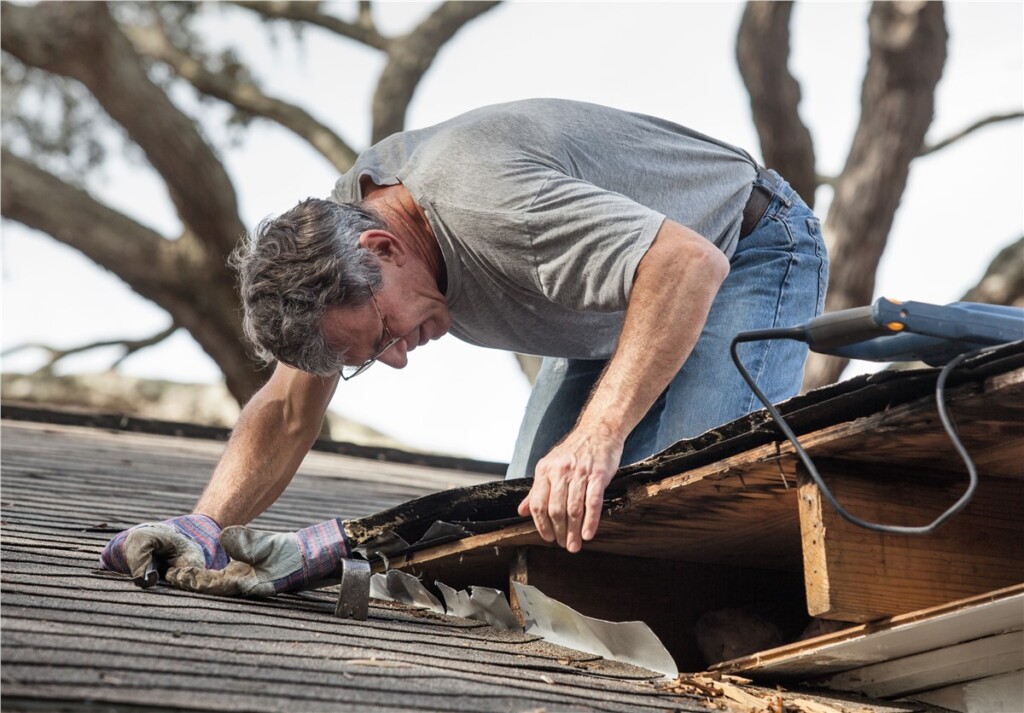
Short answer: Most roof leak repairs run between $400 and $1,500. Minor fixes like a few cracked shingles or a failed pipe boot can come in under $300. Larger repairs involving flashing rebuilds, decking replacement, or chimney work routinely land between $1,500 and $4,000. If the leak has been going on for a while and the decking underneath is rotted, you can spend $5,000 or more before you’re done.
That’s a wide range, and there’s a reason for it. After thirty years running Maggio Roofing in the DC and Maryland market, I can tell you the price of fixing a leak has almost nothing to do with the leak itself. It has everything to do with what caused it, where it is, and how long it’s been ignored.
What You’re Actually Paying For
When a roofer quotes a leak repair, you’re paying for three things: the trip out, the diagnosis, and the fix. The diagnosis is the part most homeowners underestimate. A leak shows up on your bedroom ceiling, but the actual point of failure on the roof might be eight feet away. Water travels. It runs down the underside of the decking, follows a rafter, drips off a nail. Finding where it’s actually getting in is the work.
For example, a homeowner calls because there’s a stain over the kitchen. Easy assumption: hole in the roof above the kitchen. Reality: a chimney flashing failed thirty feet uphill, and the water has been running along the decking and showing up in the only spot it could find a way out. Charging $300 to put roof cement on the wrong spot doesn’t fix anything. The leak comes back the next storm.
What the Common Repairs Actually Cost
Here are the price ranges we typically see on residential asphalt shingle roofs in our market:
- Pipe boot replacement: $150 to $400. The rubber collar around plumbing vents dries out and cracks, usually around year 10 to 12. Easiest leak source to fix.
- Replacing a small section of shingles: $200 to $500. If wind tore off a few or a tree branch knocked some loose, this is straightforward, assuming we can match the shingle.
- Step flashing repair around a chimney or sidewall: $400 to $1,200. If the flashing was installed wrong originally, it has to be cut out and rebuilt, which means pulling shingles too.
- Skylight leak: $300 to $1,500. Sometimes it’s just the flashing kit. Sometimes the skylight itself has failed and needs to be replaced.
- Decking replacement under the leak area: add $300 to $1,500 on top of the surface repair. Once water has been getting in for a while, the OSB or plywood rots and has to be cut out.
- Emergency tarp or temporary patch: $200 to $600. If there’s an active storm and you need to stop water immediately, that’s a separate trip.
For tile, slate, or standing seam metal roofs, multiply most of those numbers by 1.5 to 2. Different materials, different labor, different risk on the roof.
When Repair Doesn’t Make Sense
To me, the most important question on any leak call isn’t “what does the repair cost.” It’s “is this roof worth repairing.”
Say you’ve got a 22-year-old asphalt roof, granules washing into the gutters every rain, and three leaks in the last two years. Spending $1,500 to fix the current one buys you maybe a season. The other shingles on that roof are at the end of their life, and the next leak is already on its way. My rule of thumb: if the roof is past 75% of its expected lifespan and you’re calling for the third repair, the math says replace.
A new asphalt roof in our area runs $9,000 to $25,000 depending on size, pitch, and tear-off. That’s a real number. But spending $4,500 over three years patching a roof that’s going to need replacement anyway is just delayed cost. And in the meantime you’re risking interior damage that your insurance may or may not cover.
The Hidden Costs Most Homeowners Forget
The leak repair itself is rarely the whole bill. By the time water is showing up inside your house, you may also be looking at:
- Drywall and paint on the interior ceiling: $300 to $1,200
- Insulation replacement in the attic: $400 to $1,500
- Mold remediation if it’s been wet long enough: $500 to $6,000
- Damaged flooring or possessions if the water ran far from the source
I tell customers all the time: the cheap fix is the one you call about the day you see the stain. The expensive fix is the one you call about six months later.
What to Ask Before You Hire Anyone
A few questions worth asking before you sign anything. How did you diagnose the source of the leak, and what did you actually find on the roof? What’s the warranty on the repair, and is it in writing? Are you licensed and insured in this state? If decking turns out to be rotted once you open it up, what’s the per-sheet price for replacement, and will you call me before adding it?
A roofer who can’t answer those clearly is probably going to charge you twice. Once for the wrong fix, and again for the right one.
A roof leak isn’t an emergency the first day. By the third day it might be. The right time to deal with it is now, while you can still pick the contractor instead of being picked by whoever can show up fastest.